
What Johnson County Deed Records Convey
Filing type shapes what a record can tell you. The Johnson County Clerk Legal Records Department accepts deeds, mortgages, liens, plats, easements, releases, powers of attorney, wills, tax liens, and similar instruments. Each kind of instrument answers a different question about title.
| Deed Type | What It Does | Common Use |
|---|---|---|
| Warranty deed | Conveys the described interest with stated covenants | Sale or family conveyance |
| Quitclaim deed | Conveys whatever interest the grantor holds | Family transfer or title cleanup |
| Commissioner deed | Documents a court-authorized transfer | Judicial sale or division |
| Sheriff deed | Records an official-sale transfer | Enforcement or tax context |
| Affidavit of descent | Places inheritance facts in the land record | Estate and heir trail |
A deed moves an interest in land. Mortgages, liens, easements, and leases burden or shape it instead. Read the filing itself, including the legal description, rather than trusting the index line alone.
Johnson County's 1966 and 2004 Divide
Here is the divide to remember. The clerk indexes deeds and mortgages in CCLIX back to 1966. Most instrument images online only run from January 2004 forward. So a pre-2004 index hit without a picture calls for a trip to the office. The online land-record page explains eCCLIX access. The clerk states that public indexes and documents may be inspected free at the Suite 124 counter. Online use requires an account. It may carry access charges or restrictions. eCCLIX is convenient for remote inquiry. The counter remains the verified free route. It may reach images or books the account cannot.
Search eCCLIX by Reference or Party
Two documented search methods exist: BOOK/PAGE/TYPE and COMBINATION PARTY BY DATE. Use the first when a parcel record or a prior deed already supplies a citation. Turn to the second when you know only a grantor, grantee, business, estate, or rough date.
| Method | Enter | Use |
|---|---|---|
| Book/Page/Type | Book, page, type code | Retrieve a known reference |
| Party by Date | Name, date span, type | Discover conveyances |
| Name variants | Initials, spacing, former/entity name | Recover indexing differences |
The system's own terms warn that the database may be incomplete or incorrect. Treat any hit as an index lead, and examine the actual filing before relying on it.
Deeds Before the Online Index
The KDLA Johnson inventory catalogs deed microfilm from 1843 through 1987. It also lists surveys from 1843 through 1935, wills from 1844 through 2003, and selected tax books from 1844 through 1892. The public library reports tax-record microfilm beginning in 1793. The clerk says some holdings reach the 1700s. These are separate series, not interchangeable coverage promises. Older legal descriptions may follow creeks, branches, ridges, roads, acreage, surveys, and adjoining owners. Compare those calls closely whenever a parcel was split or merged.
Walk Johnson County's Grantor-Grantee Chain
A grantor conveys an interest, and a grantee receives it. Start from the newest verified deed, then reverse the chain by treating each grantor as the next historical subject.
- Find the current roll owner and latest conveyance.
- Record parties, type, date, citation, and legal description.
- Search the latest grantor as a grantee in an earlier span.
- Repeat while comparing acreage, adjoining owners, and prior references.
- Move to counter books, KDLA reels, surveys, wills, or probate when eCCLIX stops.
- Grantor
- The party conveying an interest.
- Grantee
- The party receiving it.
- Chain of title
- The connected sequence of conveyances for a tract.
- Book/page or instrument number
- The clerk's retrieval citation.
Estate Transfers Break a Simple Name Chain
A death in the chain changes the paperwork. You may need wills, affidavits of descent, fiduciary instruments, commissioner deeds, and probate orders. Vital records help build a timeline. But the recorded filing or court order is what explains the land transfer. The clerk indexes wills back to 1797. KDLA lists will reels from 1844 through 2003. Search the Johnson Circuit Court Clerk for the complete case. Do not assume a statewide index holds the full file. Match every probate clue back to the legal description.
DocAlert Watches New Deeds and Mortgages
The clerk links the free Johnson County DocAlert, a service that emails you when a deed or mortgage is recorded under a subscribed personal or business name. It is a notification tool, not a title lock. An unfamiliar alert should prompt you to obtain the recorded instrument and contact the clerk through independently verified information.
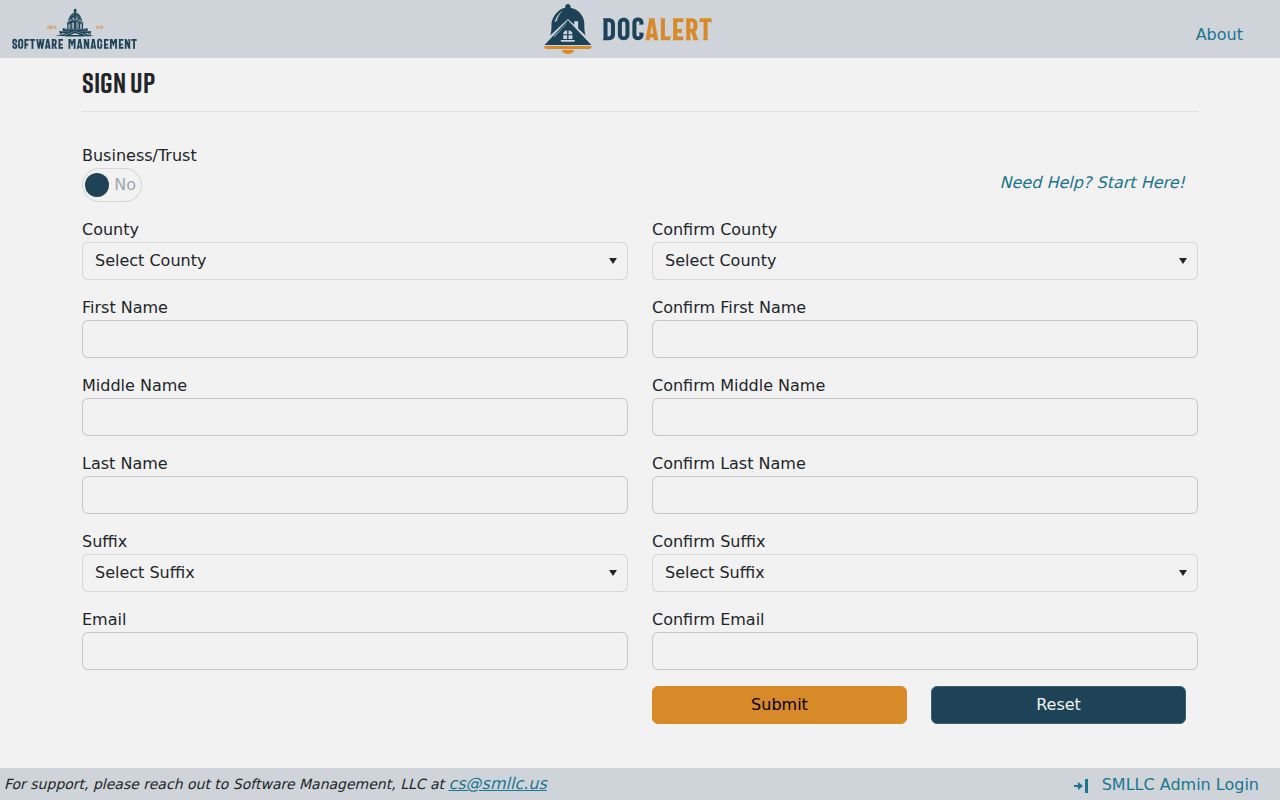
Note: Spelling variants can hide recordings, so let any alert send you back to the official filing.
Get a Johnson County Deed Copy
Visit 230 Court Street, Suite 124, Paintsville, weekdays 8 a.m. to 4 p.m., or request through online, mail, fax, email, and open-records channels. Supply a book/page or instrument number whenever you can. Ask the clerk to explain the difference between free inspection, ordinary image printing, certification, and recording a new instrument.
| eCCLIX | Account-based remote index and available images |
|---|---|
| Counter | Public indexes and documents stated free to inspect |
| Written request | Hand, mail, fax, or email under the clerk policy |
| Certified copy | Confirm charge and delivery with the clerk |
Recorded, not guaranteed. Filing places an instrument in Johnson County deed records; it does not itself establish clear title or validate every claimed interest.
Recording Charges Are Different From Copy Costs
The clerk fee schedule, effective January 1, 2020, sets a deed at $50, a deed correction at $46, a mortgage at $80, a plat at $50, an easement at $50, and an affidavit of descent at $50. Pages after the first five add $3 each. Mortgage overages begin after 30 pages. These are recording charges for new filings, not the price of viewing an existing deed. Verify current amounts before you file.
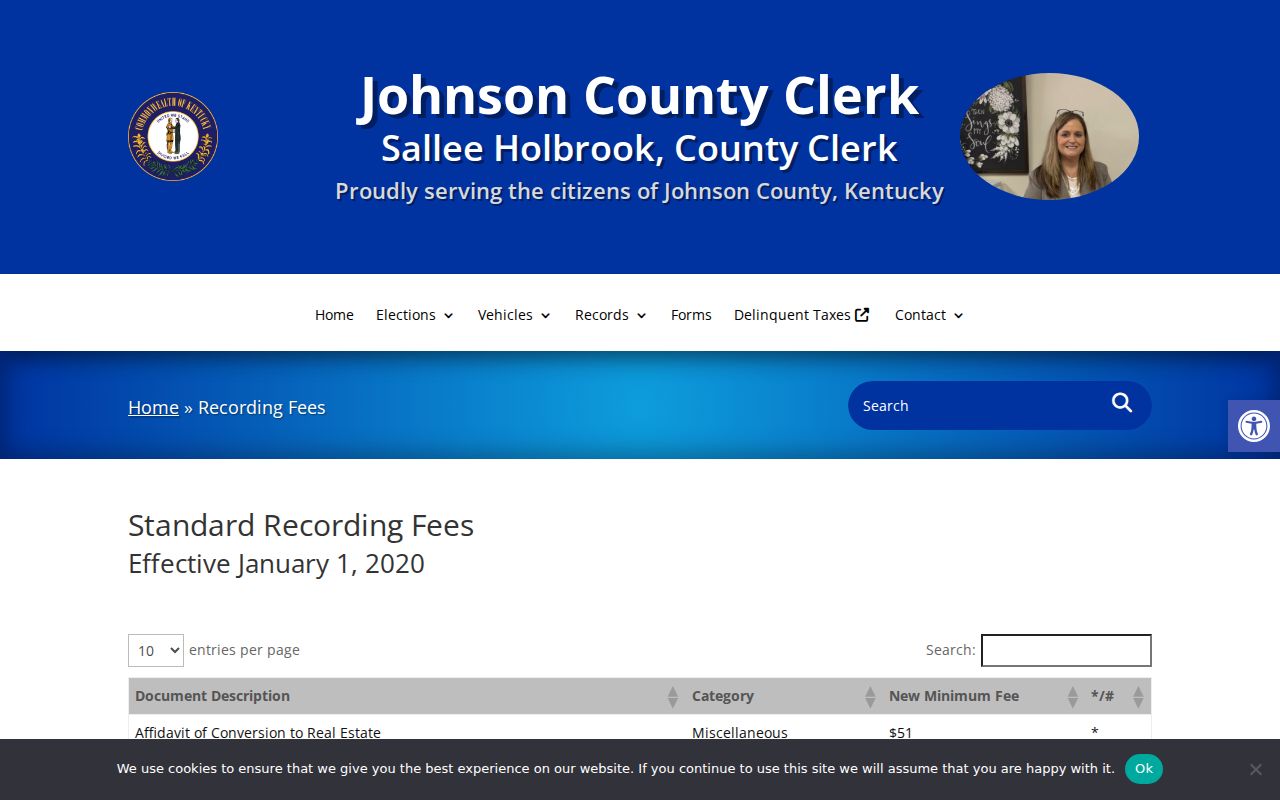
Separating recording, inspection, printing, and certification prevents a common fee error.
Follow the Legal Description Through Johnson County
A party name starts the search. The legal description confirms that successive instruments concern the same land. Modern records may give a parcel or account number. Earlier deeds can describe acreage along a creek, branch, ridge, or road. They may refer to a survey. They may name adjoining owners. They may also incorporate a prior deed by book and page. Copy those details exactly and compare them at every link. A parcel split or merger can make a modern identifier useless in an old index. Compare acreage, boundary calls, adjoining owners, and prior-recording references instead. Recorded plats can explain town lots and subdivisions, while survey reels preserve older calls. KDLA lists Johnson survey microfilm from 1843 through 1935. That overlaps its deed run from 1843 through 1987. A Paintsville mailing address does not mean a tract lies inside Paintsville. Postal geography and municipal boundaries answer different questions. Verify the incorporated boundary separately before drawing any city zoning conclusion.
Mortgages, Liens, and Releases Beside the Deed
A single conveyance never tells the whole story in Johnson County deed records. The clerk also records the instruments that sit beside the deed. These include mortgages, assignments, modifications, and releases. Mechanic's liens, judgment liens, and federal and state tax liens appear here too. So do easements, leases, lis pendens notices, powers of attorney, and contracts for real estate. Search by party and by document type on both sides of the transfer date. A property records search that stops at the deed misses the encumbrances that shape title. Each document type answers a different question. A mortgage records secured financing, not a change of ownership. A release shows that a mortgage or lien was discharged. But it only counts if it connects to the right original filing. A lis pendens signals litigation affecting property. The full dispute lives in the Johnson Circuit Court file. An easement can burden or benefit land without moving the fee owner of record. Never infer payoff amounts from recording fees. The schedule sets a mortgage at $80, with a release at $46. An easement runs $50. A mechanic's lien or its release costs $46. A lis pendens notice or its release costs the same $46. Read the deed records themselves for the actual terms.
Use a Johnson County Deed-Chain Worksheet
Build a worksheet for every transfer you touch in Johnson County deed records. Record the dates first. Capture the recording date and the execution date if it is visible. Then note the grantor, grantee, and deed type. Add the consideration if stated, the citation, and the legal description. Note any references to earlier instruments. Finally, keep a column for image access. That way, an index-only result never gets mistaken for a deed you have actually read.
| Chain item | Record | Cross-check |
|---|---|---|
| Newest conveyance | Latest deed by recording date | PVA owner and roll year |
| Prior acquisition | Grantor searched earlier as grantee | Same description and acreage |
| Estate link | Will, affidavit, probate or fiduciary deed | Court file and chronology |
| Boundary change | Deed, plat, survey, split reference | Adjoining owners and citations |
If the party trail breaks, try entity variants and unusual deed types. For records at the 1966 index edge, move to clerk books, KDLA reels, and library resources.
Make a Narrow Open-Records Request
Sometimes the index and the counter references simply cannot answer the question. Then the clerk accepts a written open-records request. Deliver it by hand, mail, fax, or email. Identify the party or parcel, the record type, and the date range. Include any known book/page or instrument citations. Under the clerk's policy, five working days are allowed, excluding weekends and legal holidays. After that, the office must make the property records available. It must explain the added time, or issue a denial subject to KRS 61.878. Fees are modest. The local schedule prices noncommercial paper copies at 50 cents each. Computer discs, tapes, or recordings run $5 apiece. Postage may apply, and advance payment is possible. So ask whether electronic delivery, ordinary printing, or certification best fits your use. A narrow request helps in two ways. It cuts down mistaken same-name matches. It also spares the recorder from being asked to run an undefined title search through the deed records.