
Fields in Johnson County Property Tax Records
The Johnson County PVA maintains the certified assessment roll. The sheriff's office, in turn, issues the tax bill and collects on it, so read each field in whichever system actually controls that record.
| Field | What It Shows | Where |
|---|---|---|
| Tax-roll owner | Owner tied to the January 1 assessment snapshot | PVA |
| Fair cash or assessed value | Value supporting the assessment | PVA |
| Exemptions | Approved reduction affecting taxable amount | PVA |
| Bill and status | Account, amount, paid or unpaid status | Sheriff |
| Certificate of delinquency | Delinquent real-property tax claim after transfer | County clerk |
Kentucky assesses property at fair cash value. But the assessment, the taxable amount after exemptions, and deed sale consideration are three distinct figures. The tax bill is not an appraisal.
The Johnson County January 1 Owner Rule
Assessment in Johnson County locks in on January 1. Buy a parcel later in the year and the tax bill still carries the prior owner of record. The calendar has to turn first. A private tax agreement can redirect the mailing. It cannot change the certified snapshot. Want to confirm a transfer after January 1? Pull the latest recorded deed from the deed records.
This one rule settles most head-scratching mismatches. It reconciles the tax roll, the sheriff bill, and the clerk's index. Note: always pair every copied owner name with its assessment year and recording date.
Search the Sheriff Portal by the Right Field
The Johnson County tax portal offers a Search By menu, a search text box, Account Type, an option to include inactive accounts, Paid/Unpaid/Both, and a security check. Its full year coverage is not stated. County instructions say to leave street type and direction out of a Property Location search.
| Search choice | Best input | Caution |
|---|---|---|
| Account | Exact number, including punctuation | Examples resemble 126-0586-00010 |
| Owner | Tax-roll spelling | May still show January 1 owner |
| Mailing address | Owner correspondence line | Not the property location |
| Property location | Number and base street name | Omit direction and street type |
How Kentucky Builds the Assessment
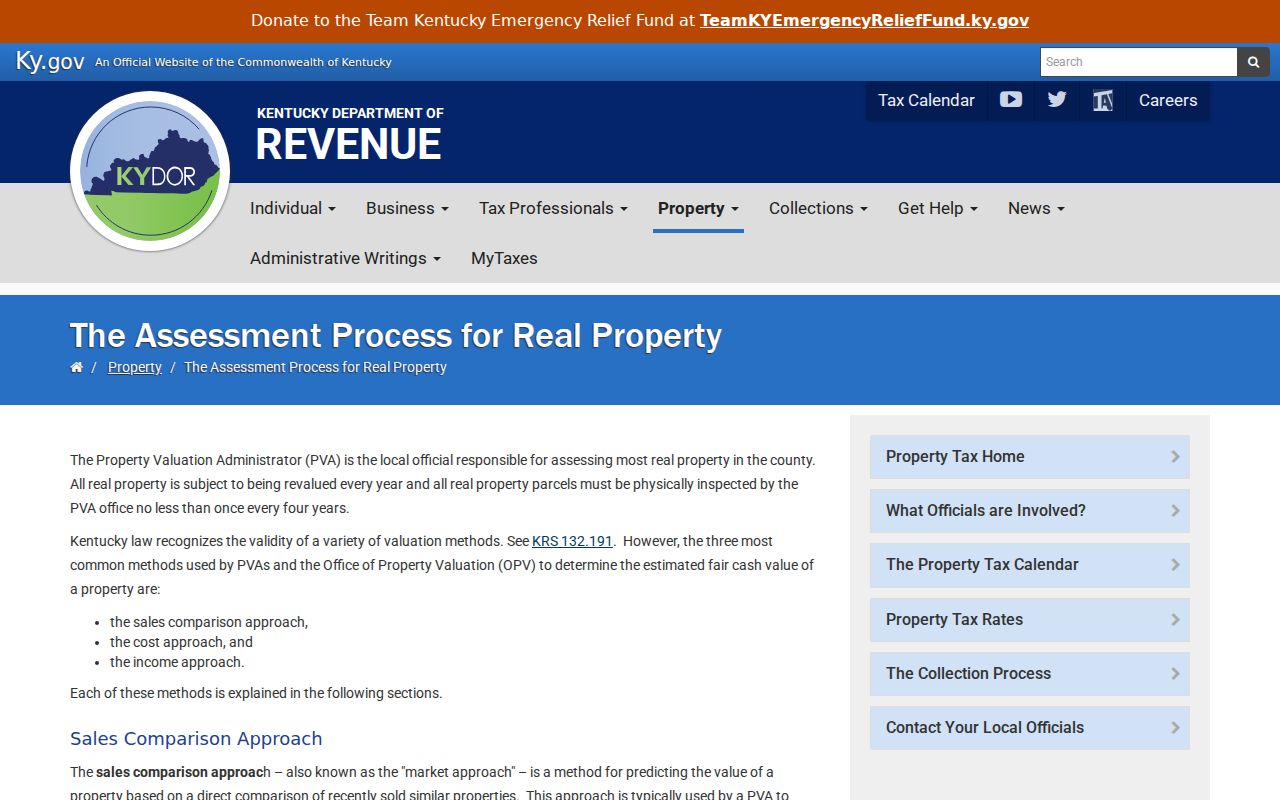
The Kentucky Department of Revenue sets fair cash value three ways. It uses sales, cost, and income approaches. Revaluation is annual. A physical inspection cycle generally reaches each parcel at least once every four years. Agricultural property and statutory exemptions follow separate statutory rules. That state framework shapes how Johnson County property tax records are built.
The method used and evidence available can shape a productive PVA conference.
Look Up a Johnson County Tax Bill
Start with the parcel number from qPublic. The sheriff's system is built around payment, so match its account to the PVA assessment roll before drawing any conclusion from a paid or unpaid status.
- Search qPublic by owner, location, parcel, or legal information.
- Copy the exact parcel/account and assessment year.
- Search the sheriff portal by account or shortened property location.
- Compare owner, paid status, and exemptions with their respective source records.
- Call the clerk about a real-property certificate of delinquency.
- Assessed value
- The value placed on the roll under Kentucky assessment rules.
- Levy
- The rate applied by a taxing jurisdiction.
- Homestead exemption
- A statutory reduction for eligible owners.
- Tax lien
- A claim arising from unpaid tax, distinct from the original bill.
Payment and Delinquency Use Different Channels
The sheriff accepts online, mail, or in-person payment at 339 Main Street, Paintsville. Checks name Johnson County Sheriff. Include the bill number. Card payments add a 2.5 percent charge. For real-property delinquent payoff, the sheriff refers callers to the county clerk at 606-789-2557. Kentucky procedures allow certificates of delinquency to be assigned to third-party purchasers. A September 18, 2025 Johnson sale date is history. It is not a permanent annual deadline. Check the current DOR property-tax resources and county notices for the active season.
Homestead and Disability Relief
Exemption questions go to the PVA, not the sheriff's payment desk. Kentucky's homestead exemption covers qualifying owners under its age or disability rules. For 2025-2026 the exemption amount is $49,100. The PVA confirms eligibility and the application documents for the year in question. An exemption changes the taxable calculation only. It never changes the deed owner, the parcel boundary, or the fair-cash-value evidence. Keep exemption status separate when comparing assessments across properties.
Appeal a Johnson County Assessment
Real property is listed January 1 through March 1. The inspection period opens the first Monday in May, runs six days a week with Saturday hours, and ends on the third Monday. Conference with the PVA first. Request the conference form. Bring comparable sales, photographs, measurements, repair evidence, or anything else that speaks to value. After inspections close, the local board route opens. The board generally meets 25 to 35 days later. A state appeal through the Kentucky Board of Tax Appeals then follows within 30 days of the local decision.
Appeal window. The deadline is one working day after the inspection period ends, and the PVA conference is required before the local board appeal.
Choose the Paintsville Office by Question
The PVA sits at 230 Court Street, Suite 229, and handles assessments, ownership on the roll, characteristics, and exemptions. The sheriff at 339 Main Street takes payment questions. The county clerk, in Suite 124, keeps recorded instruments and real-property delinquent-tax certificates. Together they form a short county-seat workflow. They keep different records, though. Carry the parcel number, assessment year, and any deed citation between offices so staff can match the same tract without relying on a name alone.
Reconcile the PVA Roll With the Sheriff Bill
Capture the essentials from the qPublic parcel card first. Note the parcel number, owner spelling, situs, mailing address, assessment year, value, and exemption status. Then note the sheriff bill's year, account number, and paid status. The two records serve different masters. The PVA builds the assessment roll. The sheriff bills and collects from that roll.
Classify any mismatch before reporting it. A deed recorded after January 1 explains an older owner on the bill. A mailing address can differ from the property location without any error. Punctuation may make an account number look different across screens. An inactive filter can hide an older account. A parcel split or merger can occur. It can generate a successor number. The PVA handles assessment identity questions at 606-789-2564; the sheriff handles bill status.
Exact result labels and the depth of historical years online vary. If the public interface omits a year you need, visit the PVA at 230 Court Street, Suite 229, weekdays from 8 a.m. to 4 p.m.
Evidence for a Johnson County Value Conference
An appeal lives or dies on evidence tied to the assessment date. Bring recent comparable sales, photographs, measurements, and repair estimates. Condition evidence can carry weight. Income and expense figures for an income-producing property carry weight too. A professional appraisal also carries weight. A deed's stated consideration can matter. It does not automatically equal fair cash value under every circumstance.
The PVA conference comes first; it is the required opening step. Ask how the land and improvements were described and which valuation approach was applied. Fix factual errors before debating the number. When you offer comparables, explain why their location, use, size, condition, and sale timing make them reasonably comparable. Do not simply choose lower assessments.
The Kentucky appeal instructions lay out the evidence and the route from conference to the local board. They also cover the Kentucky Board of Tax Appeals. Follow the current year's PVA dates. Statutory deadlines recur by weekday, not fixed calendar dates.
Track a Delinquent Johnson County Account
An unpaid current bill starts in the sheriff's collection system. Delinquency changes the door. A real-property account can become a certificate of delinquency. Once it does, the clerk becomes the key local contact. The clerk's legal-record inventory includes delinquent property-tax records, assignments, reassignments, and releases. Those filings show claim movement, not a current payoff.
| Stage | Primary source | Question answered |
|---|---|---|
| Current bill | Sheriff | Amount and current paid status |
| Assessment dispute | PVA | Value, characteristics, exemption |
| Certificate of delinquency | County clerk | Recorded tax claim and assignment trail |
| State procedure | Kentucky DOR | Calendar and third-party purchaser framework |
The clerk's dated recording schedule lists $30 for assignment of a certificate of delinquency and $46 for reassignment or release. Those are recording charges, not the taxpayer's payoff. Ask the responsible office or holder for an up-to-date payoff.
Separate Value, Taxable Amount, and Sale Price
Fair cash value, or assessed value, is the PVA's valuation under Kentucky law. Taxable amount reflects any eligible exemption. The levy turns the taxable base into tax for each jurisdiction. The bill records the obligation and collection status. A deed may state consideration for a transfer. That figure is transaction history, not an automatic present valuation.
These figures can diverge for good reasons. A sale may be between related parties. It may span multiple tracts or reflect conditions a simple record never shows. An exemption cuts the taxable amount without touching fair cash value. A revaluation may follow the most recent sale. A deed recorded late in the year may not change the January 1 tax-roll owner. That change waits until the following year.
When comparing Johnson County property tax records, keep each number's source, date, and definition beside it. It stops a bill amount from being called a value. It keeps deed consideration separate from an assessment. It also prevents an exemption-adjusted taxable amount from being lined up against an unadjusted figure.